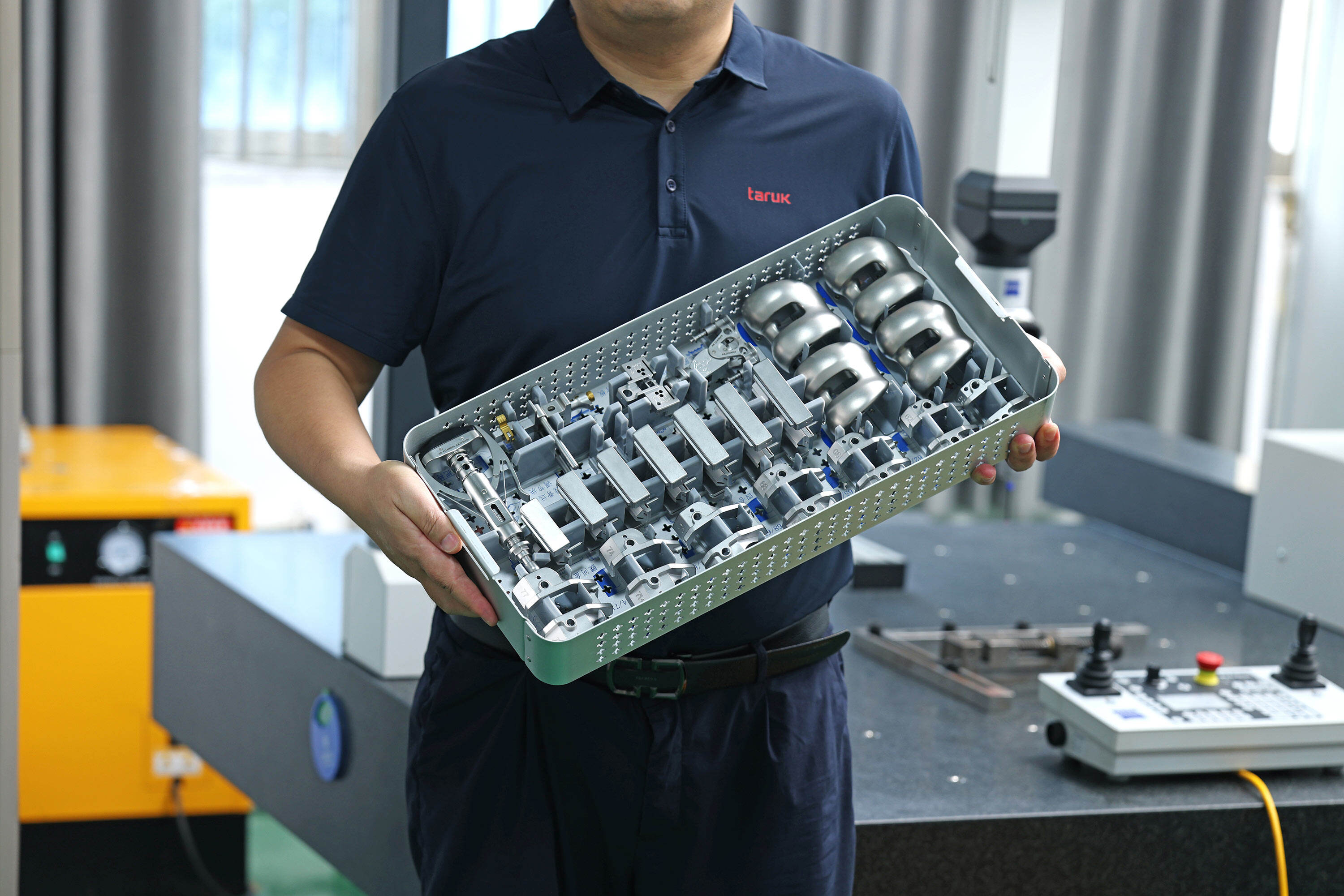
In the highly regulated and technically demanding field of orthopedic medical devices, the journey from raw material to implantable product is governed by an uncompromising principle: precision at the micron level directly translates to patient safety outcomes. For orthopedic OEM manufacturers, this relationship between dimensional accuracy and clinical success forms the foundational logic that drives every aspect of production strategy, quality control, and regulatory compliance. Understanding how microscopic tolerances influence biomechanical performance, osseointegration, and long-term implant stability is essential for medical device companies seeking manufacturing partners capable of delivering consistent, safe, and effective orthopedic solutions.
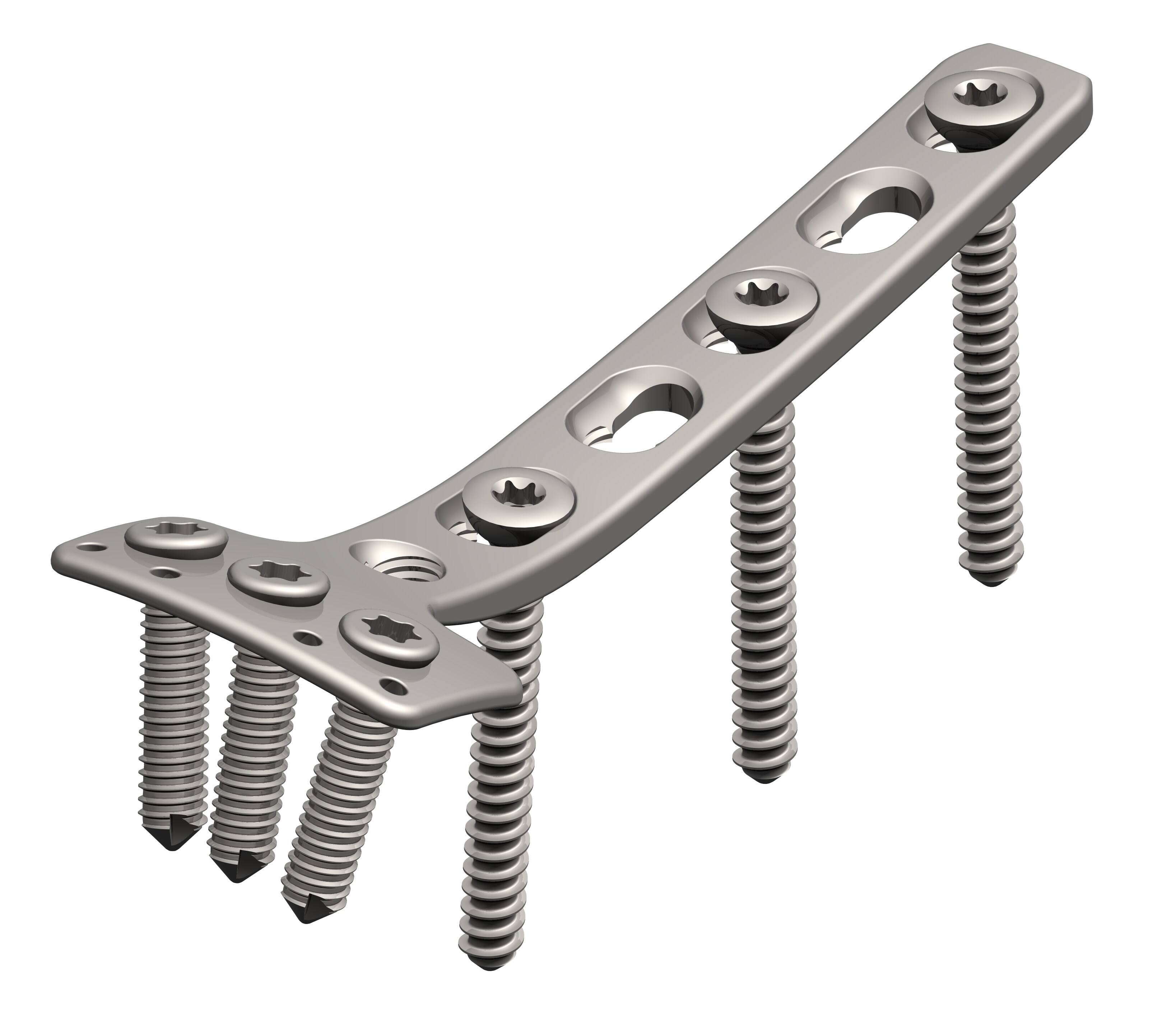
The core logic connecting precision manufacturing to patient safety in orthopedic OEM operations extends beyond simple dimensional conformance to specifications. It encompasses material science principles, surface finish requirements, biocompatibility considerations, and the complex interplay between implant geometry and human tissue response. When a locking plate or intramedullary nail deviates from specified tolerances by even tens of microns, the consequences can cascade through multiple performance dimensions—from compromised screw-plate interface stability to altered stress distribution patterns that accelerate implant failure or bone resorption. This article examines the technical, clinical, and operational rationale that makes micron-level precision not merely a manufacturing capability but a patient safety imperative in modern orthopedic device production.
The Biomechanical Foundation of Micron-Level Precision Requirements
How Dimensional Accuracy Affects Load Distribution and Stress Concentration
The biomechanical environment surrounding orthopedic implants subjects these devices to complex, multi-directional loading patterns that can generate stress concentrations at the smallest geometric irregularities. In orthopedic OEM manufacturing, maintaining tolerances within micron-level ranges ensures that designed load-bearing characteristics remain intact throughout the implant's functional life. When a femoral stem or tibial component exhibits dimensional deviations beyond specified limits, the intended stress distribution across the bone-implant interface becomes disrupted, potentially creating localized stress risers that initiate crack propagation in either the implant material or surrounding bone tissue.
Research in orthopedic biomechanics demonstrates that even minor variations in implant geometry—such as thread pitch accuracy in bone screws or taper angle precision in modular hip components—can alter contact pressure distribution by factors of two or three. For orthopedic OEM producers, this biomechanical sensitivity necessitates manufacturing processes capable of repeatably achieving dimensional accuracy within ±10 to ±25 microns depending on the feature criticality. The relationship between manufacturing precision and clinical performance is particularly evident in locking plate systems, where the angular stability between screws and plate holes depends on thread engagement geometry held to tolerances often tighter than 50 microns across multiple geometric parameters.
Interface Stability in Modular Systems and Assembly Tolerance Stacks
Modular orthopedic systems, which allow surgeons to assemble customized implant configurations during procedures, introduce additional precision requirements related to tolerance stack-up across multiple components. In orthopedic OEM operations producing modular hip systems, spinal constructs, or trauma fixation sets, each component's dimensional variation contributes to the total assembly tolerance that ultimately determines interface stability and mechanical performance. A femoral head-neck taper interface, for example, requires both components to maintain micron-level concentricity and surface finish specifications to achieve the Morse taper friction lock necessary for long-term joint stability.
The precision manufacturing challenge in modular systems extends beyond individual component accuracy to include geometric relationship control across mating surfaces. When orthopedic OEM manufacturers produce plate-screw systems, the relationship between plate hole diameter, thread major diameter, and locking thread geometry must be controlled within cumulative tolerances that typically cannot exceed 75-100 microns for the assembly to achieve specified locking torque and angular stability. This tolerance stack management requires sophisticated statistical process control and measurement protocols that verify not only individual feature dimensions but also geometric relationships and assembly functional performance.
Surface Topology and Its Clinical Implications
Beyond gross dimensional accuracy, micron-level precision in orthopedic OEM manufacturing extends to surface finish characteristics that directly influence biological response and mechanical performance. Surface roughness parameters measured in microns or sub-micron ranges affect osseointegration rates, bacterial adhesion potential, wear particle generation, and corrosion resistance. For cementless implants designed to achieve biological fixation, controlled surface textures with specific Ra values and texture patterns promote bone ingrowth while minimizing stress shielding effects that can lead to implant loosening.
The precision manufacturing of surface features represents a particular challenge for orthopedic OEM producers because different implant regions often require contrasting surface characteristics. A single femoral stem may incorporate a smooth polished collar region to prevent debris accumulation, a grit-blasted mid-section to encourage osseointegration, and a porous-coated proximal region to maximize biological fixation. Transitioning between these surface zones while maintaining micron-level dimensional control of the underlying substrate geometry requires manufacturing process integration and quality verification methods that few contract manufacturers can consistently execute across production volumes.
Manufacturing Process Architecture for Micron-Level Consistency
Machine Tool Capability and Thermal Stability Management
Achieving and maintaining micron-level tolerances in orthopedic OEM production environments demands machine tool capabilities that extend beyond nominal positioning accuracy to include thermal stability, dynamic stiffness, and long-term repeatability. Modern CNC machining centers used for orthopedic component production typically provide positioning resolutions of 0.1 microns, but actual achievable part accuracy depends equally on environmental temperature control, machine foundation design, and thermal growth compensation strategies. For high-precision orthopedic OEM operations, maintaining machine bed temperatures within ±0.5°C through active thermal management systems prevents dimensional drift that would otherwise compromise micron-level tolerance capabilities.
The dynamic performance characteristics of machine tools used in orthopedic OEM facilities significantly impact surface finish quality and dimensional consistency during actual cutting operations. While static positioning accuracy might meet specification, dynamic errors introduced during rapid tool path changes or under varying cutting loads can produce dimensional variations that accumulate across complex part geometries. Leading orthopedic OEM manufacturers invest in high-rigidity machine platforms with advanced vibration damping and direct-drive positioning systems that minimize dynamic errors, enabling consistent achievement of tolerances in the 10-25 micron range even for complex three-dimensional features like acetabular cup liners or anatomically contoured plates.
Measurement Systems and Statistical Process Control Integration
Verifying micron-level dimensional accuracy requires measurement systems with resolution and repeatability significantly finer than the tolerances being controlled—typically following the 10:1 rule where measurement system capability exceeds part tolerance by at least an order of magnitude. In orthopedic OEM facilities, this necessitates coordinate measuring machines with sub-micron probe resolution, laser scanning systems for complex surface verification, and optical measurement tools for non-contact dimensional analysis. The integration of these measurement capabilities into real-time statistical process control loops enables orthopedic OEM manufacturers to detect dimensional drift before out-of-specification parts are produced.
Advanced orthopedic OEM operations implement measurement strategies that go beyond traditional first-article and final inspection protocols to include in-process verification and adaptive machining correction. By measuring critical dimensions immediately after specific manufacturing operations, process engineers can identify systematic errors and implement corrective adjustments before subsequent operations multiply dimensional errors through tolerance stack effects. This measurement-informed manufacturing approach is particularly valuable for orthopedic OEM production of anatomically complex components where traditional fixture-based inspection may not adequately capture geometric relationship errors that affect clinical function.
Material Property Consistency and Its Precision Manufacturing Implications
The materials used in orthopedic implant production—including titanium alloys, cobalt-chromium alloys, and stainless steel formulations—exhibit property variations that directly affect achievable manufacturing precision. In orthopedic OEM operations, material hardness variations within a single lot of titanium bar stock can produce different cutting forces and tool deflections that translate to dimensional inconsistencies across a production run. Sophisticated orthopedic OEM manufacturers implement material qualification protocols that verify not only chemical composition and mechanical properties but also machining response characteristics that predict dimensional process capability.
Thermal treatment processes required for many orthopedic materials introduce additional precision manufacturing challenges because heat treatment operations can produce dimensional changes ranging from tens to hundreds of microns depending on part geometry and fixturing methods. Leading orthopedic OEM producers address this challenge through predictive distortion modeling and compensated pre-heat-treatment machining dimensions that account for expected dimensional changes during thermal processing. This integrated approach to material property management and precision manufacturing enables consistent achievement of final dimensional specifications while maintaining the metallurgical properties essential for implant biocompatibility and mechanical performance.
Regulatory Framework and Quality System Requirements
FDA and ISO Standards Governing Dimensional Control
The regulatory environment governing orthopedic medical devices establishes explicit expectations for manufacturing process control and dimensional verification that reinforce the connection between precision manufacturing and patient safety. FDA Quality System Regulation requirements under 21 CFR Part 820 mandate that orthopedic OEM manufacturers establish and maintain procedures for process validation, including documented evidence that manufacturing processes consistently produce results meeting predetermined specifications. For dimensional characteristics linked to safety or performance, this regulatory framework effectively requires orthopedic OEM operations to demonstrate ongoing process capability at the micron level through statistical evidence rather than simple inspection-based conformance.
International standards such as ISO 13485 and device-specific standards like ISO 5832 for metallic materials used in implants create additional precision manufacturing requirements that orthopedic OEM producers must address through their quality management systems. These standards establish not only dimensional tolerance requirements but also documentation expectations, traceability protocols, and validation methodologies that extend precision manufacturing discipline throughout the entire production chain. For medical device companies evaluating orthopedic OEM manufacturing partners, verification of ISO 13485 certification and FDA establishment registration provides baseline confidence but should be supplemented with direct assessment of dimensional process capability data and measurement system validation records.
Design Control and Design Transfer Precision Requirements
The design control requirements established in FDA regulations and ISO 13485 create explicit connections between product design specifications and manufacturing process capabilities that must be verified during design transfer activities. For orthopedic OEM relationships, this means that device specifications from the design-owning company must be accompanied by tolerance analysis, critical dimension identification, and manufacturing process recommendations that enable the contract manufacturer to establish appropriate process controls. The design transfer phase represents a critical opportunity for orthopedic OEM partners to align on dimensional requirements, measurement methods, and acceptance criteria that will govern ongoing production.
Effective design transfer in orthopedic OEM relationships includes process capability studies that demonstrate the manufacturing partner's ability to consistently achieve specified tolerances under production conditions. These studies typically follow established statistical methodologies like process capability indices that quantify the relationship between process variation and specification limits. For micron-level tolerances common in orthopedic devices, process capability indices of 1.33 or higher are often required, indicating that the manufacturing process variation consumes less than 75% of the tolerance band and provides adequate margin for long-term process stability.
Validation Protocols and Ongoing Process Monitoring
Regulatory requirements for process validation in orthopedic OEM manufacturing extend beyond initial capability demonstration to include ongoing monitoring and periodic revalidation that ensures continued process control. For precision manufacturing processes, this typically involves statistical process control charting of critical dimensions, regular measurement system analysis to verify gage capability, and periodic process capability studies that confirm ongoing compliance with validated process parameters. The frequency and rigor of these ongoing validation activities scales with the criticality of the dimensional characteristics to device safety and performance.
Leading orthopedic OEM manufacturers implement risk-based validation approaches that allocate validation resources according to the potential patient safety impact of dimensional variations. High-risk features such as locking mechanism geometries or articulating surface dimensions receive more frequent monitoring and tighter process control limits than lower-risk dimensions. This risk-based approach aligns with regulatory expectations established in guidance documents while enabling efficient resource allocation that maintains patient safety focus without excessive burden on non-critical manufacturing parameters.
Clinical Outcome Connections and Evidence-Based Precision Requirements
Implant Survivorship Data and Dimensional Specification Rationale
The dimensional specifications that drive precision manufacturing requirements in orthopedic OEM operations ultimately derive their rationale from clinical evidence linking specific geometric parameters to implant performance and patient outcomes. Registry data from large-scale implant surveillance systems such as the Australian Orthopaedic Association National Joint Replacement Registry or the American Joint Replacement Registry provides population-level evidence of implant survivorship patterns that inform dimensional design requirements. When specific implant designs or manufacturing sources exhibit elevated revision rates, investigation often reveals dimensional inconsistencies or specification inadequacies that motivated tightened tolerance requirements across the industry.
For orthopedic OEM manufacturers, understanding the clinical rationale behind dimensional specifications enables more effective process development and quality planning. A thread depth tolerance on a locking screw, for example, directly relates to achievable locking torque ranges that clinical studies have correlated with construct stability and fixation failure rates. By connecting manufacturing tolerances to clinical performance evidence, orthopedic OEM producers can prioritize process control investments and implement risk-appropriate quality strategies that focus resources on dimensions with demonstrated patient safety implications rather than applying uniform precision requirements across all features.
Adverse Event Analysis and Manufacturing Investigation Linkages
Medical device adverse event reporting systems create traceable connections between clinical failures and manufacturing processes that reinforce the importance of precision control in orthopedic OEM operations. When implant failures occur, regulatory requirements mandate investigation of potential manufacturing contributions, often including dimensional verification of returned devices and retrospective analysis of manufacturing records for the affected lot. These investigations frequently reveal dimensional deviations at or beyond specification limits that contributed to clinical failure modes, providing compelling evidence for the patient safety value of micron-level precision manufacturing.
The adverse event investigation process also generates continuous improvement feedback for orthopedic OEM manufacturers, often resulting in specification revisions, process enhancement, or additional control requirements that emerge from field performance analysis. Sophisticated orthopedic OEM partners maintain systematic approaches to incorporate field performance data and adverse event trends into their quality management systems, using this clinical feedback to refine process control strategies and prevent recurrence of manufacturing-related device issues. For medical device companies selecting orthopedic OEM partners, evidence of systematic adverse event review processes and documented corrective actions based on field performance provides confidence in the manufacturer's commitment to patient safety beyond basic specification compliance.
Surgeon Feedback and Usability-Related Precision Requirements
Beyond direct safety considerations, precision manufacturing in orthopedic OEM operations affects surgical usability characteristics that influence procedural efficiency and clinical outcomes. Surgeon feedback regarding instrument-implant interfaces, assembly ease, and intraoperative performance often traces to dimensional variations within specification limits that nonetheless affect practical usability. A plate contouring process that produces edge geometry variations within tolerance may still create sharp edges that complicate soft tissue management, while screw thread engagement characteristics that meet dimensional specifications might nonetheless produce inconsistent tactile feedback that affects surgeon confidence during insertion.
Leading orthopedic OEM manufacturers incorporate surgeon usability feedback into their dimensional control strategies, sometimes establishing internal specifications tighter than customer-provided requirements to address known usability sensitivities. This proactive approach to precision manufacturing recognizes that clinical success depends not only on implant mechanical performance but also on surgeon confidence and procedural efficiency enabled by consistent manufacturing quality. For complex procedures involving multiple components and surgical steps, dimensional consistency across production lots enables surgeons to develop reliable tactile expectations and technical familiarity that contribute to optimal patient outcomes.
Strategic Selection Criteria for Orthopedic OEM Manufacturing Partners
Technical Capability Assessment Beyond Equipment Lists
Medical device companies evaluating potential orthopedic OEM manufacturing partners should look beyond simple equipment inventories to assess the integrated technical capabilities that enable consistent micron-level precision. While modern CNC machines and coordinate measuring equipment represent necessary infrastructure, the differentiating factors lie in process integration, environmental control, and quality system sophistication. A facility tour should reveal evidence of temperature-controlled manufacturing environments, documented machine qualification and periodic accuracy verification programs, and measurement system capability studies that demonstrate measurement uncertainty well below tolerance requirements for critical dimensions.
The human capital and technical expertise resident within an orthopedic OEM organization represents equally important capability factors that manifest in process development effectiveness and problem-solving capacity. Experienced manufacturing engineers and quality professionals in orthopedic device production bring accumulated knowledge of material behavior, process optimization strategies, and regulatory expectations that accelerate development timelines and minimize costly redesign cycles. During partner evaluation, medical device companies should assess not only current process capabilities but also the organization's demonstrated ability to develop and validate new processes for novel device designs or challenging material-geometry combinations.
Quality Management System Maturity and Risk Management Integration
The maturity of an orthopedic OEM manufacturer's quality management system provides significant predictive value for long-term partnership success and consistent manufacturing performance. Beyond basic ISO 13485 certification, indicators of quality system maturity include risk-based process control strategies, proactive process monitoring with statistical trending, and systematic continuous improvement programs that address process capability enhancement. Medical device companies should review evidence of corrective and preventive action effectiveness, process validation documentation completeness, and measurement system analysis protocols that demonstrate sophisticated understanding of precision manufacturing quality requirements.
Integration of risk management principles throughout the orthopedic OEM organization's operations indicates advanced quality system maturity particularly relevant for precision manufacturing partnerships. This integration appears in design transfer protocols that include formal risk analysis of manufacturing process capabilities relative to dimensional requirements, in process failure mode and effects analysis activities that identify critical control points, and in validation strategies that allocate verification rigor according to risk assessment outcomes. Medical device companies should seek orthopedic OEM partners whose quality systems demonstrate this risk-based thinking rather than uniform procedural approaches that fail to differentiate critical from non-critical control parameters.
Supply Chain Control and Material Traceability Systems
Precision manufacturing performance in orthopedic OEM operations depends significantly on upstream supply chain control and material property consistency that extends beyond the manufacturing facility itself. Leading orthopedic OEM manufacturers implement supplier qualification programs that verify not only material chemical composition and mechanical properties but also material processing history and microstructural characteristics that affect machining behavior and dimensional stability. Raw material traceability systems should enable rapid identification of all devices manufactured from specific material lots, supporting efficient investigation and containment in the event of material-related quality issues.
The depth of supplier relationships and vertical integration level within an orthopedic OEM organization affects both cost efficiency and quality consistency. Manufacturers with established relationships with medical-grade material suppliers often receive preferential allocation of premium material grades and benefit from supplier technical support during process development activities. Some orthopedic OEM producers maintain vertical integration into heat treatment, surface treatment, or specialized coating operations that represent critical quality control points for dimensional precision and biocompatibility. Medical device companies should evaluate whether a potential orthopedic OEM partner's supply chain structure and supplier management practices provide adequate control over the upstream factors that influence manufacturing precision and device performance.
FAQ
Why do orthopedic implants require micron-level manufacturing tolerances when surgical precision is typically measured in millimeters?
Although surgical placement accuracy operates at the millimeter scale, the biomechanical and biological performance of orthopedic implants depends critically on micron-level geometric precision for several reasons. Interface stability in modular systems and locking mechanisms requires dimensional accuracy within tens of microns to achieve specified mechanical performance. Surface finish characteristics measured in microns directly affect osseointegration rates and corrosion resistance. Stress concentration factors that initiate fatigue failures or stress shielding effects develop from geometric irregularities at the micron scale. Additionally, consistent assembly torque values and instrument-implant interfaces that surgeons rely on during procedures require manufacturing precision far tighter than surgical placement accuracy to ensure reliable intraoperative performance across production lots.
How do orthopedic OEM manufacturers verify dimensional accuracy for complex three-dimensional implant geometries?
Modern orthopedic OEM facilities employ multiple complementary measurement technologies to verify complex implant geometries comprehensively. Coordinate measuring machines with touch-probe or laser scanning capabilities capture thousands of dimensional points across complex surfaces, comparing measured geometry against CAD models to identify deviations. Optical measurement systems provide non-contact verification particularly valuable for delicate features or finished surfaces where probe contact might cause damage. For production monitoring, specialized functional gauges verify critical geometric relationships such as locking angles or taper fits that affect assembly performance. Leading manufacturers integrate these measurement systems with statistical process control software that trends dimensional performance and provides early warning of process drift before specifications are violated.
What quality system documentation should medical device companies review when qualifying orthopedic OEM manufacturing partners?
Comprehensive due diligence for orthopedic OEM partner qualification should include review of ISO 13485 certification and FDA establishment registration documentation, process validation protocols and summary reports demonstrating capability for similar device types, measurement system analysis studies showing gage repeatability and reproducibility for critical dimensions, and process capability study results quantifying manufacturing variation relative to specification limits. Additionally, review of the supplier quality management procedures, corrective action effectiveness metrics, design transfer protocols, and adverse event investigation processes provides insight into quality system maturity. Medical device companies should also examine training records demonstrating personnel competency in precision manufacturing and quality control methods specific to orthopedic device production requirements.
How does material selection affect achievable manufacturing precision in orthopedic OEM production?
Material properties significantly influence achievable dimensional precision through multiple mechanisms that orthopedic OEM manufacturers must address in process design. Hardness variations within and between material lots affect cutting forces and tool deflection, potentially producing dimensional inconsistencies across production runs. Thermal expansion coefficients determine dimensional changes during heat treatment and sterilization processes that must be compensated through process design. Material microstructure affects surface finish achievability and dimensional stability over time. Residual stress patterns in wrought or forged materials can produce distortion during machining as material is removed and stress patterns equilibrate. Leading orthopedic OEM manufacturers implement material qualification protocols that characterize these property variations and develop process parameters optimized for the specific material lots being manufactured to maintain consistent dimensional performance across changing material supplies.
Table of Contents
- The Biomechanical Foundation of Micron-Level Precision Requirements
- Manufacturing Process Architecture for Micron-Level Consistency
- Regulatory Framework and Quality System Requirements
- Clinical Outcome Connections and Evidence-Based Precision Requirements
- Strategic Selection Criteria for Orthopedic OEM Manufacturing Partners
-
FAQ
- Why do orthopedic implants require micron-level manufacturing tolerances when surgical precision is typically measured in millimeters?
- How do orthopedic OEM manufacturers verify dimensional accuracy for complex three-dimensional implant geometries?
- What quality system documentation should medical device companies review when qualifying orthopedic OEM manufacturing partners?
- How does material selection affect achievable manufacturing precision in orthopedic OEM production?