In the highly regulated and technically demanding world of orthopedic medical devices, the difference between a successful implant and a catastrophic failure often comes down to tolerances measured in micrometers. Original Equipment Manufacturer partnerships in the orthopedic sector are built on trust, regulatory compliance, and most critically, the unwavering commitment to precision manufacturing. When hospitals, surgeons, and patients depend on hip replacements, spinal implants, and trauma fixation devices to restore mobility and quality of life, the manufacturing standards that produce these components become non-negotiable. The role of precision manufacturing extends far beyond simply meeting dimensional specifications—it encompasses material integrity, surface finish consistency, biocompatibility assurance, and the ability to reproduce exact specifications across thousands or millions of units without deviation.
Orthopedic device OEM partnerships represent a unique convergence of engineering excellence, regulatory expertise, and clinical understanding. These collaborations are not typical vendor-buyer relationships but strategic alliances where manufacturing precision directly impacts patient outcomes, liability exposure, and brand reputation. Unlike consumer products where minor variations may be acceptable, orthopedic implants operate within the human body under constant mechanical stress, biochemical exposure, and immune system surveillance. A femoral stem that deviates by even fifty micrometers from its specified geometry can lead to improper load distribution, accelerated wear, implant loosening, or catastrophic failure requiring revision surgery. This article explores the fundamental reasons why precision manufacturing serves as the cornerstone of quality in orthopedic device OEM partnerships, examining the technical, regulatory, clinical, and business imperatives that make manufacturing precision the defining characteristic of successful collaborations in this critical healthcare sector.
The Technical Imperative of Precision Manufacturing in Orthopedic Biomechanics
Biomechanical Load Transfer and Dimensional Accuracy
The human musculoskeletal system generates forces that can exceed three to five times body weight during normal walking and running activities. Orthopedic implants must not only withstand these repetitive loads over decades of use but also distribute them in ways that promote bone integration and prevent stress shielding or catastrophic failure. Precision manufacturing ensures that the geometry of bearing surfaces, taper connections, and bone-contacting interfaces matches the design specifications validated through finite element analysis and biomechanical testing. When an acetabular cup is manufactured with precision tolerances, the hemispherical geometry ensures proper contact with the femoral head, minimizing edge loading that can accelerate polyethylene wear and generate harmful debris. Similarly, the Morse taper interface between a femoral stem and modular head requires precision manufacturing to achieve the interference fit necessary for mechanical stability without fretting corrosion.
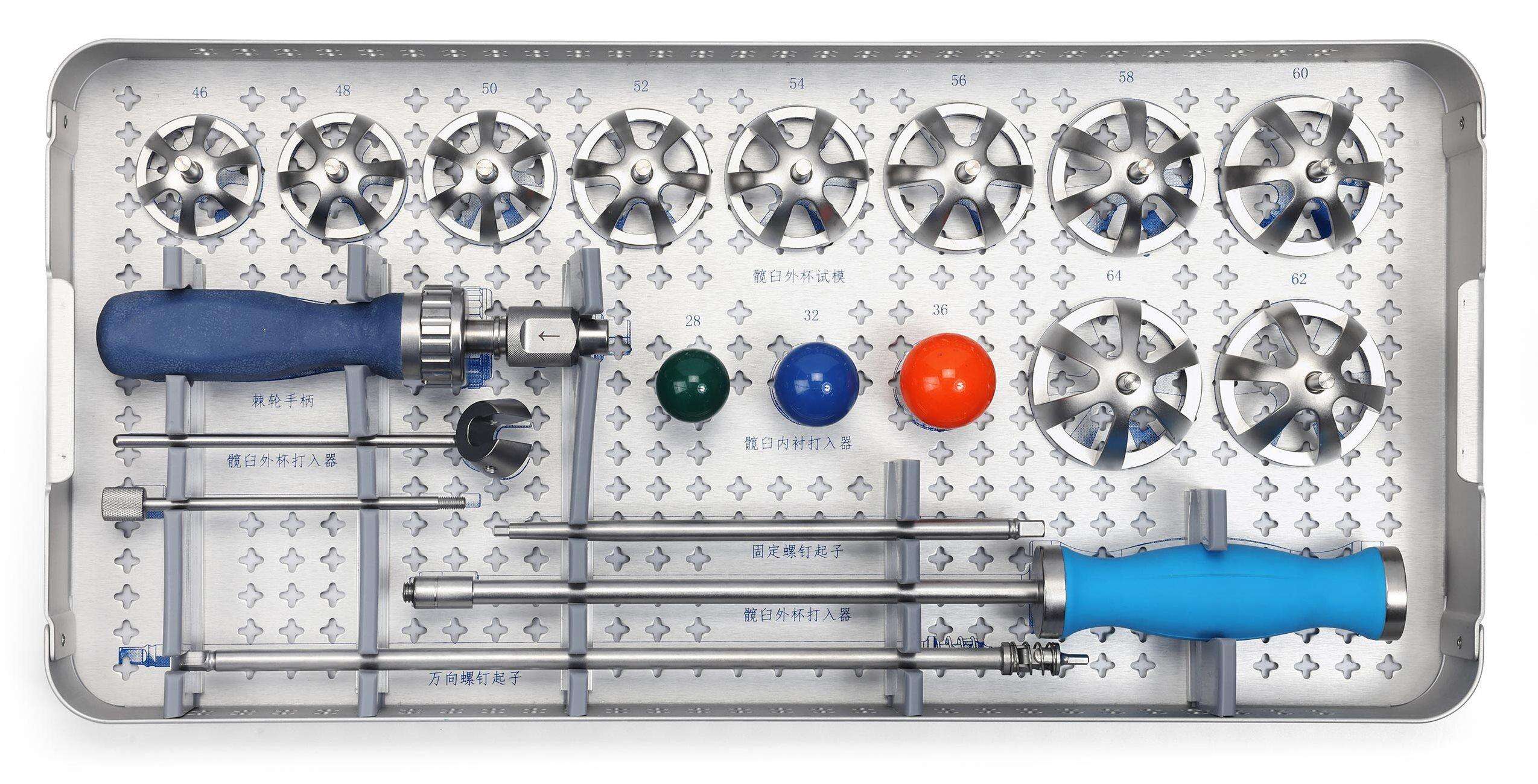
The relationship between manufacturing precision and biomechanical performance becomes especially critical in areas of stress concentration. Orthopedic devices often feature complex geometries including internal cavities for cement fixation, porous coatings for osseointegration, and features such as flanges, fins, or grooves that influence load distribution. Each of these design elements depends on precision manufacturing to function as intended. A porous coating applied with inconsistent thickness or pore size distribution will not achieve the intended bone ingrowth characteristics, potentially leading to implant loosening. Thread forms on bone screws must be manufactured with exact pitch, depth, and profile to achieve optimal pullout strength without causing stress risers that could initiate fracture. The acetabular instrument set used during hip replacement surgery requires precision manufacturing to ensure that reaming, impaction, and positioning tools interact correctly with implant components, enabling surgeons to achieve the planned orientation and press-fit stability.
Surface Finish and Tribological Performance
The bearing surfaces of orthopedic implants represent one of the most demanding applications of precision manufacturing in the medical device industry. Whether the articulation involves metal-on-polyethylene, ceramic-on-ceramic, or metal-on-metal interfaces, the surface finish directly determines wear rates, debris generation, and long-term implant survival. Precision manufacturing processes such as precision grinding, lapping, and polishing achieve surface roughness values measured in nanometers, creating the mirror-like finishes necessary for low-friction articulation. A femoral head with surface irregularities will abrade the polyethylene liner, generating wear particles that trigger inflammatory responses leading to osteolysis and implant failure. Research has consistently demonstrated that surface roughness variations of just a few hundred nanometers can double or triple polyethylene wear rates in hip and knee replacements.
Beyond the primary bearing surfaces, precision manufacturing also controls the surface characteristics of bone-contacting regions where biological integration occurs. Textured surfaces designed to promote osseointegration require precise control of features including grit-blasted roughness, acid-etched microporosity, or plasma-sprayed coating architecture. These surface modifications must be applied uniformly across the implant geometry, maintaining specified roughness parameters and coating thickness within tight tolerances. Variations in surface preparation can create areas of inadequate bone bonding, establishing pathways for fluid migration, bacterial colonization, or mechanical loosening. The precision manufacturing of these biologically active surfaces represents a convergence of mechanical engineering, materials science, and cell biology, where manufacturing control directly influences the cellular response at the implant-tissue interface.
Material Properties and Manufacturing Process Control
Orthopedic implants are manufactured from specialized biocompatible materials including titanium alloys, cobalt-chromium alloys, stainless steels, ultra-high molecular weight polyethylene, and various ceramic compositions. While these materials are selected for their mechanical properties and biocompatibility, precision manufacturing processes are essential to preserve and optimize these characteristics throughout fabrication. Heat treatment protocols must be precisely controlled to achieve the intended microstructure and mechanical properties without introducing residual stresses or phase transformations that could compromise fatigue resistance. Machining operations must be planned and executed to avoid work hardening, microcracking, or contamination that could serve as initiation sites for failure.
The relationship between precision manufacturing and material integrity becomes particularly evident in the production of complex components from difficult-to-machine materials. Titanium alloys, valued for their strength-to-weight ratio and osseointegration properties, present significant manufacturing challenges including tool wear, heat generation, and the tendency to gall or seize during machining. Precision manufacturing approaches including controlled cutting speeds, specialized tooling, and appropriate coolant systems are necessary to produce titanium components without surface damage or subsurface deformation. Similarly, the manufacturing of ceramic components for hip replacement requires precision control of powder composition, pressing parameters, and sintering profiles to achieve the density, grain structure, and fracture toughness necessary for bearing applications. Each manufacturing step influences the final material properties, making precision manufacturing inseparable from material performance in orthopedic applications.
Regulatory Compliance and Validation Requirements in OEM Manufacturing
FDA and International Regulatory Frameworks
Orthopedic medical devices are classified as Class II or Class III devices under FDA regulations, requiring extensive documentation of manufacturing processes, quality systems, and product validation. The FDA's Quality System Regulation and ISO 13485 standards mandate that manufacturers establish and maintain detailed process controls, with precision manufacturing capabilities documented through process validation studies, measurement system analysis, and statistical process control. For OEM partnerships in the orthopedic sector, these regulatory requirements create a framework where precision manufacturing is not merely a technical aspiration but a legal obligation supported by documented evidence of capability and consistency. Device Master Records must specify dimensional tolerances, surface finish requirements, and material specifications along with the manufacturing processes and inspection methods used to verify compliance.
Regulatory submissions for orthopedic devices typically include extensive validation data demonstrating that manufacturing processes can consistently produce devices meeting all specified requirements. This validation evidence depends fundamentally on precision manufacturing capabilities including machine tool accuracy, measurement system resolution, and statistical process capability indices. When an OEM manufacturer submits a 510(k) premarket notification or Premarket Approval application, the regulatory reviewers evaluate whether the manufacturing processes can reliably reproduce the design characteristics that were validated through biocompatibility testing, mechanical testing, and clinical studies. Any deviation from the validated manufacturing process requires additional regulatory submission and approval, creating powerful incentives for establishing robust precision manufacturing systems from the outset of the partnership. International markets including the European Union's Medical Device Regulation and various country-specific requirements further reinforce the necessity of precision manufacturing as the foundation for regulatory compliance.
Traceability and Batch Genealogy Documentation
Modern orthopedic device regulations require comprehensive traceability from raw material sourcing through manufacturing operations to final product distribution and implantation. This traceability depends on precision manufacturing systems that not only produce consistent parts but also capture detailed process data for every manufactured unit. When a hip implant is manufactured, the OEM partner must document the specific lot of titanium alloy used, the serial numbers of machine tools that performed critical operations, the calibration status of measurement equipment, the operator certifications, and the environmental conditions during manufacturing. This level of documentation is only possible when precision manufacturing systems incorporate data acquisition capabilities that automatically record process parameters and link them to individual device serial numbers or batch identifiers.
The importance of this precision-enabled traceability becomes evident when post-market surveillance identifies a potential safety issue or when a device complaint requires investigation. Regulatory authorities expect manufacturers to rapidly determine whether the issue is isolated to a specific batch, related to a particular manufacturing parameter deviation, or indicative of a systemic problem. Precision manufacturing systems with integrated data collection enable this forensic analysis, allowing OEM partners to quickly identify the root cause, assess the scope of potential impact, and implement corrective actions. In the event of a product recall, the combination of precision manufacturing and detailed traceability allows manufacturers to precisely define which devices require field action, minimizing the scope of the recall while ensuring patient safety. This capability to demonstrate control and respond effectively to quality issues reinforces the competitive advantage of OEM partnerships built on precision manufacturing foundations.
Change Control and Process Transfer Protocols
Orthopedic device OEM partnerships often involve technology transfer from design organizations to manufacturing facilities, process improvements implemented over the product lifecycle, or transitions between manufacturing sites as business needs evolve. Each of these scenarios requires rigorous change control protocols that depend fundamentally on precision manufacturing capabilities. When a manufacturing process is transferred from one facility to another, the receiving facility must demonstrate that its equipment, personnel, and systems can reproduce the precision characteristics validated at the original site. This process validation typically involves installation qualification of manufacturing equipment, operational qualification of process parameters, and performance qualification demonstrating statistical equivalence to the original manufacturing site.
The ability to successfully transfer manufacturing processes between OEM partners depends on the degree to which precision manufacturing parameters have been documented and controlled. Vaguely specified processes that rely on operator skill or informal knowledge are nearly impossible to transfer reliably, while processes defined through precision manufacturing parameters including tool paths, cutting forces, temperature profiles, and measurement protocols can be reproduced at new locations with high fidelity. This transferability becomes increasingly important as orthopedic device companies globalize their operations, seeking OEM partners in different geographic regions to serve local markets or optimize supply chain economics. Precision manufacturing serves as the common language that enables these transitions, providing objective parameters that can be verified through measurement rather than subjective assessments of acceptability. The regulatory agencies recognize this importance, requiring manufacturers to demonstrate process equivalence through direct comparison of critical quality attributes produced at different sites.
Clinical Performance and Patient Safety Implications
Implant Survival Rates and Revision Surgery Prevention
The ultimate measure of quality in orthopedic devices is clinical performance measured through implant survival rates, patient-reported outcomes, and complication frequencies. Long-term registry data from countries including Sweden, Australia, and the United Kingdom consistently demonstrate that implant survival to fifteen or twenty years varies significantly between different device designs and manufacturers. While design factors contribute to these differences, precision manufacturing plays a crucial role in determining whether individual implants perform according to their design intent. A well-designed hip implant manufactured with poor precision will underperform compared to its potential, while a modest design executed with exceptional precision manufacturing can achieve excellent clinical results.
Revision surgery for failed orthopedic implants represents a significant burden for patients, healthcare systems, and device manufacturers. These procedures are technically more challenging than primary surgeries, involve greater complication risks, and deliver inferior functional outcomes compared to well-functioning primary implants. Many revision surgeries result from manufacturing-related factors including wear debris generation from imprecisely finished bearing surfaces, stress concentration from dimensional variations, or coating delamination from inadequately controlled deposition processes. OEM partnerships built on precision manufacturing foundations deliver devices that perform consistently across the patient population, minimizing the tail of early failures that damage brand reputation and generate liability exposure. The statistical distribution of implant performance narrows as manufacturing precision improves, reducing the probability of outlier devices that fail prematurely despite meeting minimum specification requirements.
Intraoperative Surgical Experience and Technique Sensitivity
Orthopedic surgeons develop preferences for specific implant systems based not only on clinical outcomes but also on intraoperative handling characteristics including instrument ergonomics, implant insertion feel, and the predictability of achieving the intended construct. These surgical experience factors are profoundly influenced by precision manufacturing of both the implants and the surgical instruments used to prepare bone and position components. When broaches, reamers, impactors, and trial components are manufactured with high precision, they interact predictably with bone anatomy and with the final implant components, giving surgeons confidence in the procedural workflow. Conversely, instruments manufactured with poor tolerances may bind, chatter, or require excessive force, increasing operative time and surgeon frustration while potentially compromising the quality of bone preparation.
The precision manufacturing of instrument sets becomes particularly important for minimally invasive surgical techniques where tactile feedback is limited and visualization is constrained. Surgeons performing hip replacement through anterior or posterior mini-incisions depend on instruments that track accurately along guide wires, engage bone predictably, and deliver implants to the intended position without requiring multiple attempts or adjustments. Similarly, robotic-assisted orthopedic surgery systems require extreme precision in both the implants and instruments to maintain the submillimeter accuracy that justifies the technology investment. OEM partners who invest in precision manufacturing of surgical instruments alongside the implants themselves deliver integrated systems that support surgical efficiency and reproducibility, factors that increasingly influence surgeon adoption decisions and hospital purchasing preferences in competitive markets.
Biological Response and Biocompatibility Assurance
The biological response to orthopedic implants depends not only on bulk material composition but also on surface characteristics controlled through precision manufacturing. Surface roughness, oxide layer thickness, residual machining debris, and microstructural features all influence protein adsorption, cellular adhesion, and the cascade of biological events that determine whether an implant integrates successfully or triggers inflammatory responses leading to failure. Precision manufacturing processes designed to minimize surface contamination, control oxide formation, and achieve specified surface topographies enable predictable biocompatibility across manufactured lots. Variations in manufacturing processes can alter these surface characteristics in ways that affect biological performance even when dimensional specifications are met.
The generation of wear debris from articulating surfaces represents one of the most significant biocompatibility challenges in orthopedic devices, with submicron particles triggering inflammatory cascades that lead to osteolysis and implant loosening. Precision manufacturing of bearing surfaces minimizes wear rates, but equally important, it reduces the probability of manufacturing defects such as scratches, embedded contaminants, or localized roughness variations that can dramatically accelerate debris generation. The biological consequence of manufacturing precision extends beyond the intended device performance to include the absence of unintended features that could compromise biocompatibility. OEM partnerships that prioritize precision manufacturing reduce the variability in biological response across the patient population, contributing to more predictable clinical outcomes and lower complication rates. This consistency in biological performance becomes particularly important as orthopedic devices are implanted in increasingly diverse patient populations including younger, more active individuals and older patients with compromised bone quality or systemic health conditions.
Business and Supply Chain Advantages of Precision Manufacturing Partnerships
Cost of Quality and Long-Term Economic Performance
While precision manufacturing requires significant investment in advanced machine tools, metrology equipment, and process control systems, the economic case for these investments becomes compelling when viewed through the lens of total cost of quality. OEM manufacturing partnerships built on precision foundations experience lower scrap rates, reduced rework requirements, and fewer field complaints compared to operations focused on meeting minimum specifications. The cost savings from eliminated scrap and rework often justify the capital investment within the first few years of production, while the avoided costs of field actions, litigation, and brand damage deliver ongoing economic benefits throughout the product lifecycle. Precision manufacturing enables right-first-time production, where conformance is verified through in-process measurement rather than discovered through post-production inspection when corrective action options are limited and expensive.
The economic advantages of precision manufacturing extend beyond direct manufacturing costs to include reduced inventory requirements and improved supply chain responsiveness. When manufacturing processes operate with high capability indices and low variation, safety stock requirements decrease because the probability of producing out-of-specification parts diminishes. This inventory reduction frees working capital while enabling more responsive production scheduling aligned with actual demand rather than forecasts buffered by safety factors. OEM partners demonstrating precision manufacturing capabilities can credibly commit to shorter lead times and smaller minimum order quantities, providing their orthopedic device customers with supply chain flexibility that becomes increasingly valuable in markets characterized by unpredictable demand patterns and short product lifecycles. The business relationship between device companies and OEM manufacturers strengthens when precision manufacturing enables reliable delivery of conforming product, reducing expediting costs, shortage-related customer dissatisfaction, and the operational disruptions that ripple through both organizations when quality issues emerge.
Intellectual Property Protection and Design Confidentiality
Orthopedic device OEM partnerships inherently involve sharing proprietary design information, manufacturing process knowledge, and market intelligence between organizations that may also serve competing customers. The level of intellectual property protection and design confidentiality achieved in these relationships depends significantly on the precision manufacturing capabilities of the OEM partner. When an OEM manufacturer possesses advanced precision manufacturing capabilities including multi-axis machining, additive manufacturing, or specialized surface treatment processes, they can execute complex proprietary designs without requiring extensive technical support or knowledge transfer from the device company. This self-sufficiency in translating design intent into manufactured product reduces the exposure of confidential information while accelerating the development timeline.
Conversely, OEM partners with limited precision manufacturing capabilities require more extensive hand-holding, process development support, and ongoing technical assistance, increasing the risk that proprietary information will be exposed or inadvertently transferred to other customers. The organizational structures and information barriers necessary to protect confidential information become more difficult to maintain when multiple design engineers and process specialists must collaborate closely over extended periods. Precision manufacturing competency enables cleaner separations between customers' proprietary information, with standardized advanced manufacturing processes applied to execute diverse designs without cross-contamination of intellectual property. Device companies increasingly recognize this risk-mitigation advantage when selecting OEM partners, viewing precision manufacturing capability not merely as a technical specification but as an indicator of the organizational maturity and process discipline necessary to protect confidential information in competitive markets. The ability to execute confidential projects with minimal knowledge transfer becomes a differentiating competitive advantage for OEM manufacturers serving the orthopedic device industry.
Scalability and Global Market Access
Successful orthopedic devices often require rapid scaling from initial market launch volumes to high-volume production serving global markets. This scaling trajectory challenges OEM manufacturing partnerships to maintain precision manufacturing standards while increasing production rates, potentially adding shifts, expanding facilities, or transferring production to additional sites. The scalability of precision manufacturing depends on the degree to which critical process parameters have been identified, validated, and documented in ways that enable replication. Manufacturing processes that achieve precision through highly skilled operators performing operations on general-purpose equipment scale poorly because the skilled workforce becomes a bottleneck and training timelines extend significantly. In contrast, precision manufacturing processes based on specialized fixtures, dedicated automation, and statistical process control scale more predictably because the critical knowledge resides in the process design rather than individual operator expertise.
Global market access for orthopedic devices requires OEM manufacturing partners capable of demonstrating precision manufacturing compliance with diverse regulatory frameworks including FDA requirements for the United States, MDR requirements for Europe, and country-specific regulations for markets including Japan, China, Brazil, and India. Precision manufacturing provides the common technical foundation that satisfies these varied regulatory requirements, with documented process validation, measurement system capability, and statistical process control serving as universal evidence of quality system maturity. OEM partners with multinational manufacturing footprints leveraging precision manufacturing standards can support device companies entering new geographic markets without requiring complete revalidation at each site. This capability to rapidly enable market access across multiple jurisdictions delivers significant competitive advantage in the orthopedic device industry where time-to-market directly impacts revenue trajectories and market share dynamics. The combination of scalability and global reach enabled by precision manufacturing foundations positions OEM partnerships for long-term growth aligned with their customers' commercial success.
FAQ
What distinguishes precision manufacturing from standard manufacturing practices in orthopedic device production?
Precision manufacturing in orthopedic device production differs from standard practices through its emphasis on achieving tolerances measured in micrometers rather than millimeters, maintaining statistical process control with capability indices exceeding 1.67, and implementing comprehensive measurement systems that verify dimensions, surface characteristics, and material properties at multiple process stages. While standard manufacturing may focus on meeting minimum specification limits, precision manufacturing targets centering process outputs at nominal design values with minimal variation, reducing the probability of parts near specification boundaries that technically conform but may exhibit reduced performance or reliability. This approach requires advanced machine tools with thermal compensation, vibration isolation, and precision metrology integrated into production workflows rather than relegated to final inspection. The investment in process capability translates directly into product consistency that meets the demanding requirements of orthopedic applications where dimensional variations can impact clinical outcomes.
How does precision manufacturing affect the total cost of orthopedic device OEM partnerships?
Precision manufacturing influences total partnership costs through multiple mechanisms that often result in lower lifecycle expenses despite higher initial capital requirements. The reduction in scrap, rework, and field failures achieved through precision manufacturing typically outweighs the incremental equipment and process control costs, particularly when the full expense of product recalls, revision surgeries, and litigation is considered. Additionally, precision manufacturing enables smaller batch sizes and shorter lead times by reducing the need for extensive inspection and sorting, improving cash flow and inventory turnover. The predictability of precision manufacturing processes also reduces the contingency buffers and safety stock requirements that standard manufacturing necessitates to compensate for higher variation, freeing working capital for deployment in growth initiatives. OEM partnerships should evaluate precision manufacturing investments through total cost of ownership analysis extending across the product lifecycle rather than focusing exclusively on piece-part pricing that may obscure the value of reduced variation and enhanced reliability.
Can existing OEM manufacturing operations be upgraded to achieve precision manufacturing standards?
Existing OEM manufacturing operations can be upgraded to precision manufacturing standards through systematic assessment and targeted investment, although the feasibility and economics depend on the starting capability level and the specific requirements of the orthopedic applications being pursued. Upgrades typically begin with measurement system analysis to determine whether existing metrology equipment provides adequate resolution and repeatability for the target precision levels, followed by machine tool capability studies to identify limitations in positioning accuracy, repeatability, and thermal stability. Process improvements including enhanced fixturing, optimized cutting parameters, environmental controls, and statistical process control implementation can often achieve significant precision gains with moderate investment. However, fundamentally limited machine tools or facilities lacking appropriate environmental controls may require more substantial capital expenditure to achieve orthopedic device precision standards. The upgrade pathway should be validated through pilot production demonstrating sustainable capability before committing to full-scale implementation, with particular attention to whether precision improvements can be maintained during routine production rather than only under optimal conditions.
What role does precision manufacturing play in addressing the increasing complexity of modern orthopedic implant designs?
Modern orthopedic implant designs incorporate increasing complexity including patient-specific geometries, multi-material constructs, functionally graded porosity, and integrated biomolecular coatings that challenge conventional manufacturing approaches. Precision manufacturing serves as the enabling technology for these advanced designs, with multi-axis machining centers, additive manufacturing systems, and robotic coating applications providing the geometric flexibility and process control necessary to execute complex features accurately. The trend toward personalized implants designed from patient CT or MRI data requires precision manufacturing systems that can efficiently produce one-of-a-kind components without the economic advantages of mass production, demanding automated programming, in-process verification, and comprehensive digital workflow integration. Similarly, lattice structures and porous regions designed to optimize stress transfer and biological integration require precision additive manufacturing with layer-by-layer process monitoring to ensure that the intended architecture is faithfully reproduced. As orthopedic device designs continue to evolve toward greater personalization and functional optimization, precision manufacturing will increasingly differentiate OEM partners capable of executing advanced designs from those limited to conventional geometries and established processes.
Table of Contents
- The Technical Imperative of Precision Manufacturing in Orthopedic Biomechanics
- Regulatory Compliance and Validation Requirements in OEM Manufacturing
- Clinical Performance and Patient Safety Implications
- Business and Supply Chain Advantages of Precision Manufacturing Partnerships
-
FAQ
- What distinguishes precision manufacturing from standard manufacturing practices in orthopedic device production?
- How does precision manufacturing affect the total cost of orthopedic device OEM partnerships?
- Can existing OEM manufacturing operations be upgraded to achieve precision manufacturing standards?
- What role does precision manufacturing play in addressing the increasing complexity of modern orthopedic implant designs?