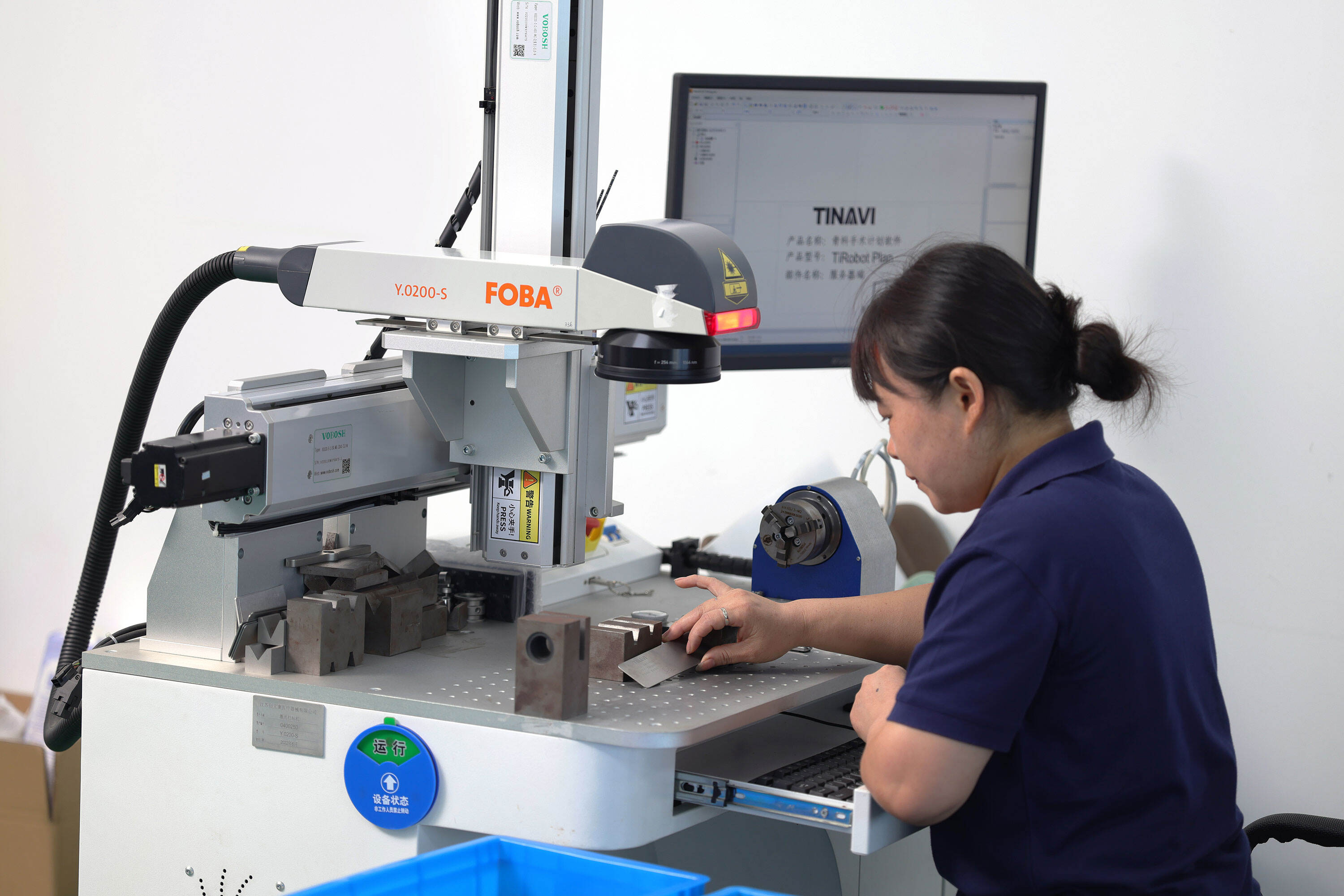
In the competitive landscape of medical device production, orthopedic device OEM partnerships have become essential for companies seeking to bring innovative surgical instruments and implants to market efficiently. However, the complexity of orthopedic manufacturing demands extraordinary attention to precision at every stage of production. When original equipment manufacturers overlook the critical importance of precision manufacturing, the consequences extend far beyond production delays—they can compromise patient safety, regulatory compliance, and long-term business viability. Understanding the specific risks associated with inadequate precision standards in orthopedic device OEM arrangements is not merely a matter of quality control; it represents a fundamental requirement for success in this highly regulated and technically demanding industry.
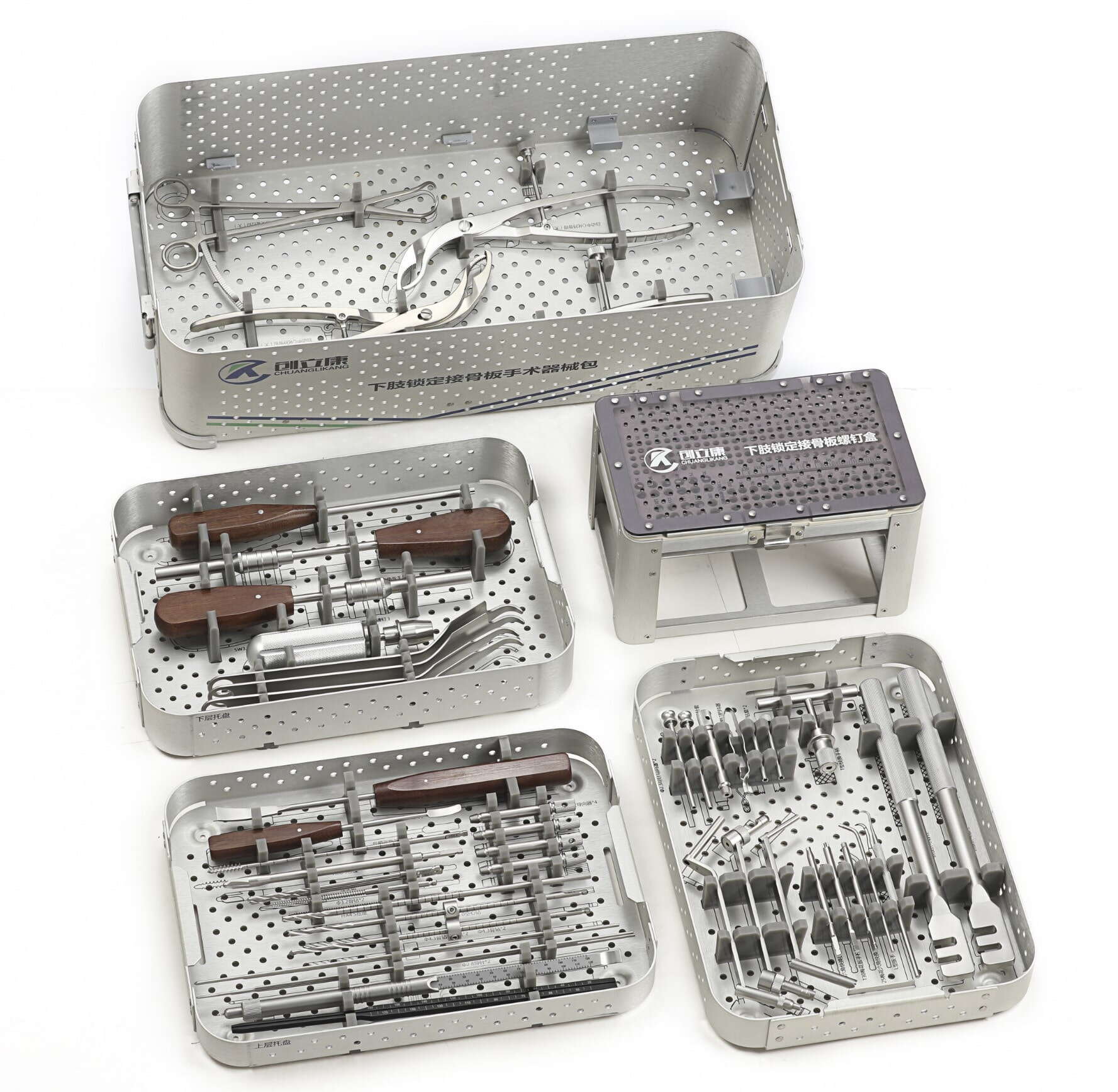
The stakes in orthopedic device manufacturing are uniquely high compared to other medical device categories. Surgical instruments and implants must meet tolerances measured in micrometers, maintain biocompatibility under extreme conditions, and perform flawlessly during critical procedures where patient mobility and quality of life hang in the balance. When companies select an orthopedic device OEM partner without thoroughly evaluating their precision manufacturing capabilities, they expose themselves to five major categories of risk that can undermine product performance, regulatory approval, market reputation, and financial stability. These risks are interconnected and cumulative, meaning that a failure in one area often cascades into multiple operational and commercial challenges that become increasingly difficult to remediate as products move closer to market launch or after commercial distribution has begun.
The Critical Nature of Dimensional Accuracy in Orthopedic Implants and Instruments
Why Micrometer-Level Precision Determines Clinical Outcomes
Orthopedic device OEM manufacturing requires dimensional accuracy that directly impacts surgical success and patient recovery. Unlike many consumer or industrial products where tolerances can be measured in millimeters, orthopedic implants and instruments often require precision within ten to fifty micrometers. This level of accuracy is essential because bone interfaces, screw threading, plate contouring, and instrument articulation points must achieve exact specifications to function properly within the human body. When an OEM partner lacks the precision machining capabilities, measurement systems, and quality control protocols to consistently achieve these tolerances, the resulting devices may fail to integrate properly with bone structures, create stress concentration points that lead to implant failure, or cause surgical complications during implantation.
The consequences of dimensional inaccuracy manifest in multiple ways throughout the product lifecycle. During surgical procedures, instruments that do not meet precision specifications may slip during drilling operations, fail to properly engage with implant components, or require excessive force that damages surrounding tissue. For implants themselves, even minor deviations from specified dimensions can prevent proper osseointegration, create gaps that harbor infection, or produce stress distributions that lead to premature mechanical failure. These clinical failures not only harm patients but also generate liability exposure, regulatory scrutiny, and market reputation damage that can take years to overcome. Companies engaged in orthopedic device OEM relationships must recognize that precision manufacturing is not simply a manufacturing preference but a fundamental clinical requirement.
Material Properties and Their Interaction with Manufacturing Precision
The relationship between precision manufacturing and material performance in orthopedic device OEM production extends beyond simple dimensional accuracy. Orthopedic devices are typically manufactured from titanium alloys, stainless steel, cobalt-chromium alloys, or specialized polymers, each with unique machining characteristics and tolerance requirements. When manufacturing processes lack precision control, the resulting dimensional variations interact with material properties in ways that compromise mechanical performance. For example, stress concentrations created by imprecise machining can initiate fatigue cracks in metallic implants, while dimensional inconsistencies in polymer components can create weak points susceptible to wear and degradation.
Furthermore, surface finish quality—which is intimately connected to precision manufacturing capabilities—directly affects biocompatibility, friction characteristics, and long-term device performance. An orthopedic device OEM partner without advanced surface finishing capabilities may produce implants with surface roughness profiles that promote bacterial adhesion, accelerate wear in articulating components, or trigger adverse tissue responses. These surface-level precision issues are often invisible during routine visual inspection but become apparent only through sophisticated metrology or after clinical complications arise. Companies must ensure their OEM partners possess not only dimensional precision capabilities but also the surface engineering expertise necessary to optimize material-tissue interactions throughout the expected service life of orthopedic devices.
Tolerance Stack-Up Effects in Multi-Component Orthopedic Systems
Modern orthopedic devices frequently consist of multiple components that must work together as integrated systems, amplifying the importance of precision manufacturing in orthopedic device OEM relationships. Plate and screw systems, modular joint replacements, spinal fixation assemblies, and instrument sets all involve multiple parts where dimensional variations accumulate through tolerance stack-up effects. When an OEM manufacturer fails to maintain tight tolerances across all components, these accumulated variations can prevent proper assembly, create excessive play between mating surfaces, or generate interference that prevents full seating of components.
The challenge of tolerance management becomes particularly acute when orthopedic device OEM production involves multiple manufacturing sites or subcontractors. Without rigorous dimensional control and statistical process monitoring across all production locations, component variations can accumulate unpredictably, leading to assembly difficulties and inconsistent device performance. Surgeons may encounter situations where screws do not thread properly into plates, locking mechanisms fail to engage securely, or instrument components require excessive force for assembly. These tolerance-related issues not only compromise surgical efficiency but also raise serious questions about device reliability and long-term mechanical integrity. Companies must ensure their OEM partners implement comprehensive tolerance analysis methodologies and maintain statistical process control across all manufacturing operations to prevent tolerance stack-up problems.
Regulatory Compliance Vulnerabilities Created by Inadequate Manufacturing Precision
FDA and International Regulatory Expectations for Manufacturing Controls
Regulatory authorities worldwide impose stringent requirements on orthopedic device OEM manufacturing processes, with particular emphasis on process validation, statistical process control, and demonstrated capability to consistently produce devices within specified tolerances. The FDA's Quality System Regulation and ISO 13485 standards require manufacturers to establish and maintain processes that ensure product conformance to predetermined specifications. When an OEM partner lacks precision manufacturing capabilities, they inevitably struggle to demonstrate process capability indices, validate manufacturing processes, and maintain the statistical control necessary to satisfy regulatory requirements.
The regulatory risks of working with an orthopedic device OEM partner that cannot consistently achieve precision specifications extend throughout the product approval and post-market surveillance lifecycle. During premarket submissions, companies must provide process validation data demonstrating that manufacturing processes are capable of consistently producing devices within specification limits. Inadequate precision manufacturing capabilities make it impossible to generate convincing validation data, potentially delaying regulatory approvals or triggering requests for additional information that extend time-to-market. After commercial launch, precision-related quality issues can trigger warning letters, product recalls, or consent decrees that not only affect the specific products involved but cast doubt on the company's entire quality management system.
Documentation and Traceability Requirements in Precision Manufacturing
Precision manufacturing in orthopedic device OEM operations requires comprehensive documentation and traceability systems that link specific manufacturing parameters to individual devices or production lots. Regulatory authorities expect manufacturers to maintain detailed records of critical manufacturing parameters, inspection results, material certifications, and process modifications. When an OEM partner lacks sophisticated manufacturing execution systems and quality management documentation, they create regulatory compliance vulnerabilities that can surface during audits, complaint investigations, or post-market surveillance activities.
The documentation burden associated with precision orthopedic device manufacturing extends beyond simple record-keeping to encompass statistical trend analysis, corrective action tracking, and continuous improvement documentation. Companies must verify that their orthopedic device OEM partners maintain electronic systems capable of correlating manufacturing process parameters with dimensional measurement results, tracking process capability trends over time, and generating audit trails that satisfy regulatory scrutiny. Without these documentation capabilities, companies face increased risk of regulatory observations, compliance citations, and challenges in investigating field complaints or adverse events. The inability to demonstrate manufacturing control through comprehensive documentation can undermine regulatory confidence even when actual product quality remains acceptable.
Material Certification and Biocompatibility Testing Implications
Precision manufacturing considerations in orthopedic device OEM relationships intersect critically with material certification and biocompatibility requirements. Manufacturing processes that fail to maintain precise control over temperatures, pressures, and surface conditions can alter material properties in ways that affect biocompatibility test results and regulatory compliance. For example, excessive heat during machining operations can alter the metallurgical structure of titanium alloys, potentially affecting corrosion resistance and biological response. Similarly, surface contamination from imprecise manufacturing processes can compromise biocompatibility testing and require additional cleaning validation studies.
Companies engaged in orthopedic device OEM partnerships must ensure their manufacturing partners understand the regulatory implications of manufacturing process variations on material properties and biocompatibility. This requires not only precision manufacturing capabilities but also sophisticated process monitoring that can detect when manufacturing conditions drift outside validated parameters. When an OEM partner lacks this level of process understanding and control, companies face the risk that material properties in commercial production may differ from those in biocompatibility test samples, potentially invalidating regulatory submissions and requiring costly retesting. The regulatory framework assumes that precision manufacturing controls will prevent such variations, making manufacturing capability assessment a critical component of regulatory risk management.
Supply Chain Disruptions and Production Scalability Challenges
Capacity Constraints in Precision Manufacturing Infrastructure
The specialized equipment and skilled workforce required for precision orthopedic device OEM manufacturing create inherent capacity constraints that can disrupt supply chains and limit production scalability. Five-axis CNC machining centers, coordinate measuring machines, laser marking systems, and clean room facilities represent substantial capital investments that cannot be quickly replicated when demand increases. When companies partner with OEM manufacturers that lack sufficient precision manufacturing capacity, they become vulnerable to production bottlenecks, extended lead times, and allocation challenges that can prevent them from capturing market opportunities or fulfilling contractual obligations to distributors and hospital systems.
The capacity limitations of precision manufacturing become particularly problematic during new product launches or market expansions when demand forecasting uncertainty is highest. An orthopedic device OEM partner with marginal capacity may appear adequate during pilot production or initial commercial volumes but prove unable to scale production when market acceptance exceeds initial projections. This capacity mismatch forces companies into reactive mode, scrambling to qualify additional suppliers or invest in capacity expansions that could have been avoided through more careful initial partner selection. The long lead times associated with precision manufacturing equipment procurement and installation—often twelve to eighteen months—mean that capacity shortfalls identified during rapid growth phases cannot be quickly remediated, resulting in lost sales, market share erosion, and damaged customer relationships.
Quality Consistency Challenges During Production Scaling
Maintaining precision manufacturing quality during production volume increases presents significant challenges for orthopedic device OEM partners. The statistical process control and measurement system capabilities that prove adequate at pilot scale often become overwhelmed when production volumes increase by factors of five to ten. Manufacturing processes that appeared stable during low-volume production may reveal hidden sources of variation when subjected to higher throughput demands, longer production runs, and multiple shift operations. Companies that fail to assess their OEM partner's ability to maintain precision during scaling operations risk encountering quality deterioration precisely when market success demands flawless execution.
The organizational challenges of maintaining precision during scaling extend beyond equipment capacity to encompass workforce training, supervision depth, and quality culture sustainability. As orthopedic device OEM operations expand production, they must proportionally increase their quality inspection staff, metrology capabilities, and process engineering support. Partners that attempt to scale production without corresponding investments in quality infrastructure inevitably experience increasing defect rates, inspection backlogs, and process control degradation. These quality consistency problems during scaling can trigger regulatory attention, increase scrap and rework costs, and necessitate field actions that damage brand reputation. Companies must evaluate whether potential OEM partners have successfully demonstrated the ability to maintain precision manufacturing standards through previous scaling experiences rather than assuming that current performance will persist at higher volumes.
Supplier Qualification and Raw Material Consistency Issues
Precision orthopedic device OEM manufacturing depends critically on consistent raw material properties, yet many OEM partners lack robust supplier qualification programs and incoming material inspection capabilities. Variations in material composition, grain structure, or mechanical properties can significantly affect machining behavior, dimensional accuracy, and final device performance. When an OEM manufacturer relies on unqualified suppliers or fails to implement rigorous incoming material testing, they introduce uncontrolled sources of variation that undermine precision manufacturing efforts regardless of equipment capability or operator skill.
The raw material consistency challenge extends throughout the orthopedic device supply chain, from titanium and stainless steel bar stock to specialty polymers and surface coating materials. Companies must verify that their orthopedic device OEM partners maintain approved supplier lists, conduct regular supplier audits, and perform incoming material testing that verifies both material certifications and actual measured properties. Without these supplier management capabilities, OEM partners become vulnerable to material substitutions, property variations, and traceability gaps that can compromise device performance and regulatory compliance. The interconnected nature of modern global supply chains means that material consistency problems can originate several tiers upstream from the OEM manufacturer, requiring sophisticated supply chain visibility and management capabilities that many OEM partners lack.
Financial Risks and Hidden Costs of Precision Manufacturing Deficiencies
Scrap, Rework, and Yield Loss Economics
The financial implications of inadequate precision manufacturing in orthopedic device OEM operations manifest most immediately through elevated scrap rates, extensive rework requirements, and depressed production yields. Orthopedic devices are typically manufactured from expensive materials—titanium alloys, cobalt-chromium, and high-grade stainless steels—where material costs can represent thirty to fifty percent of total manufacturing cost. When manufacturing processes lack precision control, the resulting dimensional non-conformances generate scrap that directly impacts profitability. An OEM partner with precision manufacturing deficiencies may exhibit scrap rates of fifteen to twenty-five percent compared to five to eight percent for manufacturers with advanced process control, representing substantial hidden costs that erode competitive positioning.
Beyond direct scrap costs, precision-related quality problems generate extensive rework expenses that compound financial impact. Rework operations for orthopedic devices often require specialized fixtures, skilled operators, and additional inspection steps that can equal or exceed the cost of initial manufacturing. When an orthopedic device OEM partner routinely relies on rework to achieve specification compliance, they signal fundamental process capability deficiencies that will generate ongoing cost pressures and quality risks. Companies must recognize that quoted piece prices from OEM partners with precision manufacturing weaknesses often conceal these hidden costs, which eventually surface through price increase requests, quality surcharges, or supply disruptions when the OEM manufacturer can no longer absorb the losses associated with poor process capability.
Product Recall and Field Action Cost Exposure
The financial risks of partnering with an orthopedic device OEM manufacturer that lacks precision manufacturing capabilities extend to potentially catastrophic product recall and field action costs. When precision-related defects escape detection during manufacturing and reach clinical use, the resulting field actions can involve not only direct recall costs but also regulatory penalties, litigation expenses, and long-term brand damage. A single recall of orthopedic implants or instruments can cost millions of dollars in direct expenses while generating reputation damage that persists for years and affects the commercial performance of unrelated products.
The liability exposure associated with precision manufacturing deficiencies becomes particularly acute for orthopedic devices given their direct impact on patient safety and quality of life. Unlike many medical devices where failures produce temporary inconvenience or require minor interventions, orthopedic device failures often necessitate revision surgeries with their associated risks, costs, and patient suffering. Companies bear ultimate responsibility for device safety regardless of whether manufacturing was performed by an OEM partner, making thorough assessment of precision manufacturing capabilities a critical risk management imperative. Insurance coverage may prove inadequate when recalls stem from fundamental manufacturing capability deficiencies that should have been identified during supplier qualification, potentially exposing companies to liability that threatens business viability.
Opportunity Costs and Competitive Disadvantage
The strategic and competitive costs of working with an orthopedic device OEM partner that lacks precision manufacturing capabilities often exceed the direct financial impacts of quality problems and supply disruptions. When manufacturing partners cannot consistently achieve tight tolerances, companies become constrained in their product development efforts, unable to pursue innovative designs that require advanced manufacturing capabilities. Competitors working with more capable OEM partners can develop products with superior performance characteristics, smaller profiles, or enhanced functionality that captures market share and establishes new performance benchmarks.
The opportunity costs extend to market timing and commercial launch effectiveness. Companies whose OEM partners struggle with precision manufacturing invariably experience extended development timelines, delayed regulatory submissions, and protracted validation studies that push product launches months or years beyond initial projections. In rapidly evolving orthopedic markets where competitive advantage often accrues to first movers, these delays translate directly into lost revenue and diminished market position. The management attention and engineering resources diverted to addressing precision manufacturing problems with inadequate OEM partners represent additional opportunity costs, preventing investment in next-generation product development or market expansion initiatives that could drive long-term growth.
Strategic Partnership Evaluation Framework for Orthopedic Device OEM Selection
Technical Capability Assessment Methodologies
Companies seeking to avoid the major risks of inadequate precision manufacturing must implement rigorous technical capability assessment methodologies when evaluating potential orthopedic device OEM partners. This assessment should extend beyond facility tours and capability presentations to encompass detailed evaluation of measurement system capability, process capability indices, and statistical process control implementation. Prospective partners should be required to demonstrate their precision manufacturing capabilities through capability studies on representative parts, showing that they can consistently achieve process capability indices of 1.33 or higher for critical dimensions. Without quantitative evidence of precision manufacturing capability, companies risk partnering with manufacturers whose verbal assurances mask fundamental capability gaps.
The technical assessment should also evaluate the sophistication of metrology capabilities and quality management systems. Modern orthopedic device OEM manufacturing requires coordinate measuring machines with sub-micrometer accuracy, surface roughness measurement capabilities, and statistical analysis software that can track process trends and trigger interventions before processes drift out of specification limits. Companies should verify that potential partners maintain calibrated measurement equipment with appropriate traceability to national standards, employ trained metrology personnel, and implement measurement system analysis protocols that ensure inspection results reliably reflect actual part dimensions. The absence of sophisticated metrology infrastructure indicates an OEM partner that cannot effectively control precision manufacturing processes regardless of their machining equipment capabilities.
Quality Culture and Organizational Maturity Indicators
Beyond technical capabilities, successful orthopedic device OEM partnerships require partners with mature quality cultures that prioritize precision and continuous improvement. Companies should assess organizational indicators such as management commitment to quality investment, employee training programs, and the presence of formal continuous improvement methodologies. OEM partners that view quality as a cost burden rather than a competitive advantage inevitably underinvest in the precision manufacturing capabilities necessary for orthopedic device production, creating long-term relationship risks that surface gradually through quality drift and responsiveness deterioration.
The organizational maturity assessment should examine how potential orthopedic device OEM partners respond to quality issues and implement corrective actions. Mature organizations employ structured problem-solving methodologies, conduct root cause investigations that identify systemic issues rather than blaming individual operators, and implement preventive actions that address underlying process capability limitations. Companies can gain insight into quality culture maturity by requesting examples of recent corrective actions, reviewing the depth of root cause analysis, and evaluating whether implemented corrections address fundamental process capabilities or merely add inspection steps. Partners that consistently resort to increased inspection rather than process improvement signal organizational immaturity that will generate ongoing precision manufacturing challenges.
Risk Mitigation Strategies and Contingency Planning
Even after careful orthopedic device OEM partner selection, companies must implement risk mitigation strategies that protect against precision manufacturing failures. These strategies should include phased production transitions that allow early detection of capability gaps before full production commitment, dual-sourcing approaches that prevent single-point dependency on any individual manufacturer, and contractual provisions that clearly define quality expectations and consequences of non-conformance. Companies should also maintain internal technical expertise sufficient to independently assess manufacturing quality and identify emerging problems before they reach clinical use.
Contingency planning for precision manufacturing failures should address both quality incident response and supply chain continuity. Companies should develop detailed quality agreements that specify inspection protocols, documentation requirements, and escalation procedures for non-conformances. These agreements should also establish clear processes for manufacturing process changes, material substitutions, and facility relocations that could affect precision manufacturing capabilities. By anticipating potential precision manufacturing challenges and establishing response frameworks in advance, companies can significantly reduce the business impact of problems that inevitably arise in complex orthopedic device manufacturing operations.
FAQ
What specific precision tolerances are typically required for orthopedic implants and instruments?
Orthopedic implants and instruments typically require dimensional tolerances ranging from plus or minus 0.05mm to 0.02mm for critical features such as screw threads, locking interfaces, and bone-contacting surfaces. Surface finish requirements usually specify Ra values between 0.4 and 1.6 micrometers depending on the application and material. Thread dimensions for bone screws must maintain particularly tight tolerances to ensure proper engagement with bone tissue and prevent stripping during insertion. Implant surfaces that interface with bone often require precise contouring to within 0.1mm to promote proper osseointegration and load distribution. These precision requirements exceed those found in most other manufacturing sectors and demand specialized equipment, skilled operators, and sophisticated quality control systems.
How can companies verify that an OEM partner truly has adequate precision manufacturing capabilities?
Companies should conduct comprehensive capability audits that go beyond facility tours to include review of actual process capability studies, measurement system analysis reports, and statistical process control data from recent production runs. Request that potential partners produce sample parts representing your most challenging dimensional requirements and independently verify these samples using your own metrology equipment or third-party inspection services. Evaluate the sophistication of their measurement equipment, calibration programs, and metrology staff qualifications. Examine their corrective action records to understand how they respond to precision-related quality issues and whether they address root causes or simply add inspection steps. Companies should also request customer references from other orthopedic device manufacturers and specifically inquire about precision manufacturing consistency over extended production periods.
What are the warning signs that an existing OEM partner may be struggling with precision manufacturing?
Key warning signs include gradually increasing defect rates, growing numbers of dimensional non-conformances requiring disposition decisions, and requests to widen specification tolerances. Other indicators include longer lead times accompanied by explanations of increased inspection requirements, frequent equipment breakdowns affecting critical precision machines, and high operator turnover in key manufacturing positions. Companies should be concerned if their OEM partner begins requesting specification clarifications on dimensions that were previously unproblematic or proposes design changes that relax dimensional requirements. Delayed responses to corrective action requests, incomplete root cause investigations, and recurring similar defects all signal precision manufacturing capability deterioration that requires immediate attention and potentially alternative sourcing strategies.
How does precision manufacturing capability affect the total cost of orthopedic device production?
Precision manufacturing capability fundamentally determines total production costs through its impact on yield rates, scrap, rework requirements, and inspection intensity. Manufacturers with superior precision capabilities typically achieve yields fifteen to twenty percentage points higher than those with marginal capabilities, directly reducing per-unit costs. Lower scrap rates preserve expensive materials like titanium and cobalt-chromium alloys, while reduced rework requirements eliminate costly secondary operations. Advanced precision manufacturing also enables reduced inspection sampling because stable processes demonstrate consistent capability, lowering quality control costs. Beyond direct manufacturing costs, precision capability affects warranty expenses, complaint handling costs, and the risk of expensive field actions. When evaluating OEM partners, companies should recognize that slightly higher quoted piece prices from precision-capable manufacturers often represent better total cost of ownership than lower quotes from manufacturers whose capability gaps generate hidden downstream costs.
Table of Contents
- The Critical Nature of Dimensional Accuracy in Orthopedic Implants and Instruments
- Regulatory Compliance Vulnerabilities Created by Inadequate Manufacturing Precision
- Supply Chain Disruptions and Production Scalability Challenges
- Financial Risks and Hidden Costs of Precision Manufacturing Deficiencies
- Strategic Partnership Evaluation Framework for Orthopedic Device OEM Selection
-
FAQ
- What specific precision tolerances are typically required for orthopedic implants and instruments?
- How can companies verify that an OEM partner truly has adequate precision manufacturing capabilities?
- What are the warning signs that an existing OEM partner may be struggling with precision manufacturing?
- How does precision manufacturing capability affect the total cost of orthopedic device production?